
Modi's greater weakness is his inability since July when he directed the exit of Dharmendra Pradhan, to come up with a political counter strategy. Security measures and executive orders as seen in recent days will only likely further weaken him and make him as lame duck a premier as many prior to him, Indira Gandhi and Manmohan Singh included, observes Nilanjan Mukhopadhyay.

The Supreme Court on Monday took note of setting up of a four-member SIT headed by IGP Kiran S to probe alleged embezzlement of donations at the Ram temple in Ayodhya and asked the Uttar Pradesh government to also include a forensic auditor in the probe team.

The Supreme Court on Monday agreed to hear a plea against the Punjab and Haryana high court order acquitting Dera Sacha Sauda chief Gurmeet Ram Rahim Singh in the 2002 murder case of a journalist.

Students at NALSAR University of Law have written to the university administration, opposing the proposal to invite the Chief Justice of India as the chief guest for their convocation. Their objection stems from the CJI-led Supreme Court bench's refusal to urgently list a plea concerning alleged police brutality during a 'Chalo Sansad' protest, which students feel contradicts the university's values.

The Supreme Court will hear a plea from journalist Abhishek Upadhyay, who is challenging an FIR filed against him by Ghaziabad police in an alleged road rage case. Upadhyay claims the FIR is retaliatory, stemming from his reporting on alleged irregularities in donations to Ayodhya's Ram temple and corruption in Uttar Pradesh. He fears arrest and seeks quashing of the FIR or transfer of the investigation to an independent agency.
The Supreme Court has directed a Special Investigation Team (SIT) to expeditiously complete its probe into the alleged embezzlement of donations at the Ram temple in Ayodhya. The court also mandated the SIT to submit a sealed status report and consider suggestions from litigants for improving transparency and investigation quality.

The campaign, launched under the leadership of IYC in-charge Manish Sharma and the wing's president Uday Bhanu Chib, seeks to reclaim the term 'cockroaches', which the organisation said had been used to mock protesting youth.

The Supreme Court resumed hearing pleas challenging the Maharashtra Speaker's decision regarding the Eknath Shinde-led Shiv Sena MLAs and the Election Commission's recognition of the Shinde faction as the "real" Shiv Sena. Senior advocate Neeraj Kishan Kaul, representing the Shinde camp, argued that the EC has jurisdiction under Article 324 to examine a party's democratic character and organisational structure, especially when the Thackeray faction's constitution was not registered with the poll panel. He emphasised that the Shinde faction's case is based on a split within the political party, not just its legislative wing, citing cadre discontent. The hearing remains inconclusive.

Chief Justice of India, Justice Surya Kant, advocates for careful integration of AI in the judicial system, emphasising the importance of human judgement and oversight in delivering justice.

The Supreme Court has agreed to hear a plea from the Muslim side regarding the non-compliance of its directions to provide an alternative site near the disputed Bhojshala complex in Dhar, Madhya Pradesh, for Friday prayers. The Muslim side alleges the proposed site is unsuitable and too far, while the Solicitor General claims another location has been identified.

The Supreme Court has affirmed its decision not to alter the five-member high-powered committee, led by former Justice R Subhash Reddy, which is investigating allegations of police excesses against student protesters and violence against police personnel in Delhi. The court dismissed concerns about potential bias, stating the committee acts as its "extended hand" and will function under its supervision. It also noted the suspension of an executive magistrate who issued a show-cause notice to a student involved in protests.

The Supreme Court of India has quashed criminal proceedings against comedian Samay Raina and four others who faced charges for remarks about people with disabilities. The court lauded their subsequent efforts in organising events and raising awareness for specially-abled persons and those with rare diseases like Spinal Muscular Atrophy (SMA).

The Supreme Court has permitted Muslims to offer Friday prayers at a site adjacent to the Bhojshala-Kamal Maula complex in Dhar, Madhya Pradesh, following a High Court ruling that declared the complex a temple. This decision allowed prayers to resume after a previous ASI order was quashed.

The Delhi High Court has ordered the unblocking of the Cockroach Janta Party's X handle, which was previously withheld due to concerns over potential "chaos" during the NEET re-test. The court's decision came after the Solicitor General stated that the primary concern was no longer relevant as the NEET exam was over. The CJP, a youth-driven satirical movement, aims to hold the government accountable and has gained significant digital traction.

Chief Justice of India, Justice Surya Kant, advocates for the integration of Artificial Intelligence (AI) into the judicial system, emphasising that it should enhance efficiency without compromising core judicial functions and human oversight.

The Supreme Court of India will commence hearings on two significant constitutional matters: the interpretation of legislative privileges of MLAs concerning freedom of speech and expression, and the power of state legislatures to impose additional sales tax levies. Both issues will be heard by seven-judge Constitution benches, with one case stemming from a 2003 plea by journalist N Ravi regarding breach of privilege.

The Supreme Court has extended its order staying the arrest of Sumit Roy, personal assistant to Trinamool Congress MP Abhishek Banerjee, in connection with the Salboni land-grabbing case. The West Bengal government alleged Roy was not cooperating with the probe, while Roy's counsel argued he has a right to silence and the case is politically motivated. The court will review a sealed cover report from the police before further proceedings.

The Uddhav Thackeray-led faction of the Shiv Sena told the Supreme Court on Tuesday that the Election Commission's (EC) determination as to which group constitutes the political party should come after a decision on the disqualification proceedings against the MLAs, who have deserted their camp.

The Supreme Court has proposed establishing special courts for day-to-day trials in criminal cases stemming from the 2023 Manipur ethnic violence. The court also directed probe agencies to expedite investigations, ensure victims receive chargesheet copies, and asked for status reports on missing persons and ongoing cases.

The Supreme Court will hear petitions on August 17 seeking a court-monitored SIT probe into alleged embezzlement of donations at the Ram temple in Ayodhya, after deferring the original hearing due to the Solicitor General's UN engagement.
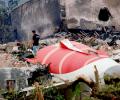
The Supreme Court has been informed that the Aircraft Accident Investigation Bureau's final draft report on the June 2025 Air India flight AI-171 crash in Ahmedabad will be submitted in October. The court is hearing petitions seeking an independent probe into the accident, which claimed 260 lives.

Supreme Court Justice Ujjal Bhuyan has criticised the collegium system for its lack of transparency in judicial appointments, specifically the absence of stated reasons for elevations. He argues that this opacity allows unsuitable candidates, who may hold unconstitutional views, to enter the judiciary, citing recent controversial remarks by a High Court judge.

The Supreme Court on Monday directed the ministry of environment, forests and climate change (MoEFCC) to conduct a nationwide survey to check if any state has constructed obstacles or created blockades in elephant corridors, saying it was unacceptable.

The mother of Cockroach Janta Party (CJP) founder Abhijeet Dipke on Wednesday claimed that her son had received a video threat coercing him to join the Bharatiya Janata Party or face severe consequences against his family.

The Supreme Court has directed its High-Powered Enquiry Committee to prioritise and immediately submit an interim report on complaints of sexual assault faced by women protesters during the July 20 NEET agitation at Jantar Mantar.
The Supreme Court has directed the Election Commission to provide details on the disposal of appeals by tribunals concerning deletions from West Bengal's electoral rolls during the Special Intensive Revision (SIR). The court emphasised the need to track the progress of these appeals, which were set up to address irregularities. It also clarified that grievances regarding the denial of PDS benefits due to voter deletion should be taken up with the Calcutta High Court.

Retiring Supreme Court Justice Sanjay Karol stated in his farewell address that judges are not gods and will not get every judgement right, emphasising the need for humility and the ability to see the real person behind every litigant.
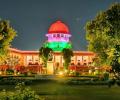
The Supreme Court has initiated suo motu action regarding an NCERT class 8 textbook that references corruption in the judiciary, raising concerns about potential defamation and the integrity of the judicial system.
The Supreme Court has dismissed Ashish Mishra's application to relax his bail conditions in the Lakhimpur Kheri violence case, preventing him from attending family functions. The court also addressed concerns raised by victim farmers' advocate Prashant Bhushan regarding the trial's conduct and witness intimidation, directing such grievances to the trial court.

The Supreme Court has quashed all FIRs against students who participated in the Cockroach Janta Party-led protests, stating the cases should not affect their future, while the government affirmed its commitment to youth welfare.
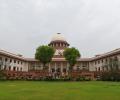
The Supreme Court, in a 6:3 majority verdict, has ruled that the expansive, labour-friendly definition of 'industry' from its 1978 Bangalore Water Supply and Sewerage Board judgement will not be used for interpreting the Industrial Relations Code of 2020. However, the 'triple test' from the 1978 verdict will still apply to pending cases under the now-repealed 1947 Industrial Disputes Act.

Cockroach Janta Party (CJP) founder Abhijeet Dipke is set to appear before a Ministry of Electronics and Information Technology (MeitY) committee regarding the withholding of the group's X account. This development comes amidst an ongoing CJP protest at Jantar Mantar demanding the resignation of Union Education Minister Dharmendra Pradhan over alleged exam irregularities and the NEET paper-leak controversy.

The Supreme Court has directed the Uttar Pradesh government's Special Investigation Team (SIT) to submit a status report on the alleged embezzlement of donation money at the Ram temple in Ayodhya. The court also issued notice to the Shri Ram Janmabhoomi Teerth Kshetra Trust following pleas for a fair and time-bound probe, including demands for a CBI investigation and a CAG audit of the temple trust's finances.
The Supreme Court has stressed the importance of law enforcement agencies exercising restraint during protests, advocating for the pacification and counselling of youngsters, even if some engage in stone-pelting, as it agreed to hear a plea regarding accountability for protest organisers.

The Supreme Court has directed an appellate tribunal to expeditiously decide an appeal filed by a 75-year-old advocate challenging the deletion of his name from the West Bengal voters' list following a Special Intensive Revision exercise. The court noted the petitioner appeared to be a bona fide resident and requested a decision within two months.

The Supreme Court has granted Trinamool Congress MP Abhishek Banerjee permission to travel abroad for three weeks for eye treatment, dismissing the West Bengal government's concerns about his return due to 16 pending cases.
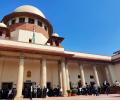
The Supreme Court has agreed to constitute a special bench to address the Centre's plea regarding the applicability of its March 11 judgment on OBC creamy-layer criteria to candidates of the Civil Services Examination (CSE) 2025. The Department of Personnel and Training (DoPT) seeks to proceed with service allocation for 958 recommended candidates based on the creamy-layer determination applied before the verdict, citing potential unequal treatment and disruption to training schedules.

The Supreme Court has established a five-member high-powered committee, led by former top court judge Justice R Subhash Reddy, to investigate allegations of police excesses against student protesters and violence against police personnel during recent demonstrations in Delhi.

The Supreme Court has agreed to urgently hear the bail plea of advocate Surendra Gadling, who has been incarcerated for seven-and-a-half years in the 2018 Elgar Parishad-Maoist links case, with the hearing scheduled for next week.

Chief Justice of India Surya Kant has recused himself from hearing petitions challenging the constitutional validity of the 2023 law regarding the appointment of election commissioners, citing a potential conflict of interest.
